
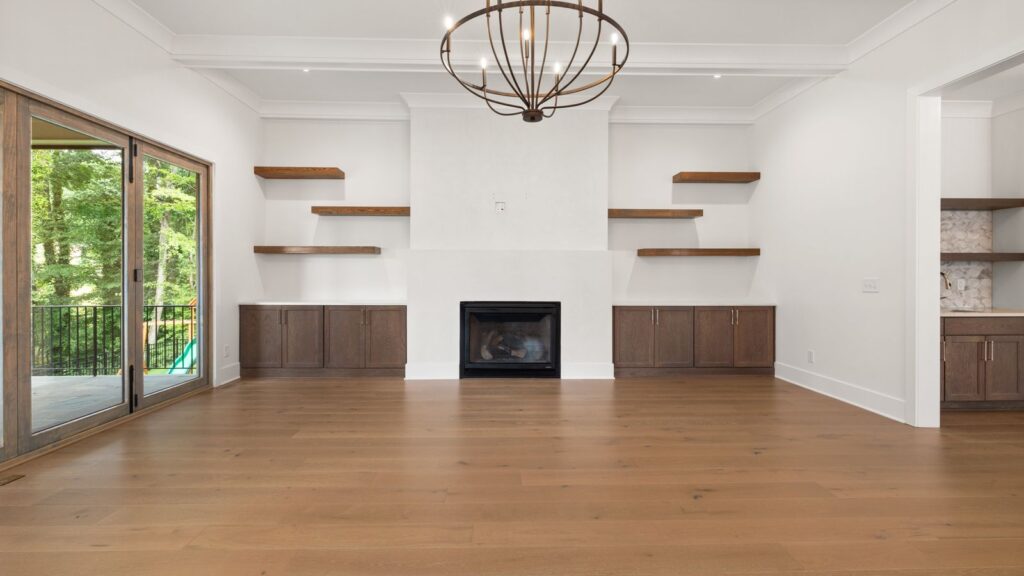
Renovating for a buyer you have not met is expensive guesswork.
That is the whole problem with big pre-sale projects. You are spending real money, on a real timeline, to guess at the taste of a person who has not walked through your front door yet. And the tricky part is that the guess usually feels reasonable while you are making it. New kitchen, sell faster, everybody wins. Then the quotes come in and the timeline doubles and you are living in a house with no sink for six weeks while your kid asks where the cereal bowls went.
So let’s think about how this actually plays out when you are trying to move up out of a house that no longer fits.
Small fixes and big renovations are two different conversations
I want to separate these clearly, because people blur them together and then talk themselves into a gut job.
Small fixes are the prep list. Caulk, paint, door hardware, the closet door that has been off its track since 2019, the light fixtures that came with the house. These are cheap, fast, and they change how a home photographs and shows. Almost always worth doing.
Big renovations are kitchens, full bathroom rebuilds, additions, finishing a basement, moving walls. Different category entirely. Different money, different risk, different answer.
Why major renovations usually do not pencil
Three reasons, and they stack.
- You rarely recover what you put in. Buyers give you credit for a renovated kitchen. They do not give you credit equal to what the kitchen cost you, plus the permits, plus the overage, plus the two months of your life.
- Your taste is not their taste. You pick finishes you like. The buyer walks in, likes the layout, and privately plans to change the backsplash anyway. You just paid for something they were going to redo.
- Half-renovated reads worse than honestly dated. A brand new kitchen next to an untouched bathroom does not say “updated.” It says “what else did they skip?” Consistency matters more than newness. A home that is uniformly lived in and well cared for shows better than a home with one showpiece room and four afterthoughts.
There is also the part nobody puts on a spreadsheet. You are already tired of this house. That is why you are moving. Spending your last months in it under a layer of drywall dust is a real cost, even if it never shows up as a number.
The actual exceptions
I am not going to tell you never renovate. Sometimes it is the right call. The list is short.
- Safety and function problems. Roof, furnace, water heater, electrical, active leaks, foundation issues. These are not upgrades. These are things that will show up in an inspection and cost you leverage at the worst possible moment. Deal with them or disclose them on purpose.
- A single room that is genuinely unusable. Not dated. Unusable. A bathroom that does not work, a kitchen that is missing pieces. There is a difference between “buyers will want to update this eventually” and “buyers cannot picture living here on day one.”
- Something already halfway done. If a project is opened up and stalled, finishing it is usually better than listing with it exposed. Unfinished work makes buyers imagine the worst.
Notice what is not on that list. Cosmetic modernization to match what buyers are seeing on their phones. That is the expensive guess.
How the unrenovated house actually sells
Positioning over perfection. This is most of my listing work across Lincoln, Waverly, Seward, Crete, and the smaller Southeast Nebraska towns where homes have been lived in hard and loved hard.
It comes down to a few things. We get honest about condition up front, in the marketing, so buyers self select instead of finding surprises at inspection. We lead with what the home genuinely offers, which is often layout, lot, storage, location, or the two things your house does better than anything else in its range. We price for the condition it is in, not the condition we wish it were in. And we make the story easy to follow so a buyer knows exactly what they are getting and what they would change later.
That approach gets homes sold. It also keeps your money in your pocket for the house you are moving into, which is the whole point.
Where that money is better spent
Here is the piece people miss when they are staring down a pre-sale renovation. Every dollar you sink into a home you are leaving is a dollar not available for the home you are going to live in for the next decade.
When we structure a move so you buy first and then sell, your current home’s condition matters less than you think. It does not have to be the best house on the block. It has to be honestly presented, correctly positioned, and ready to go when the timing lines up. We are not doing anything that puts you in a bad position, and we are not spending your next down payment on a kitchen you will use four more times.
There is a way to do this without it turning into chaos. It starts with deciding what you are actually fixing and why. Skip the guesswork and sell the house you have.
If your house technically works but doesn’t work for your life anymore, buying before you sell is the calmest way out: See how buy-before-you-sell works →