
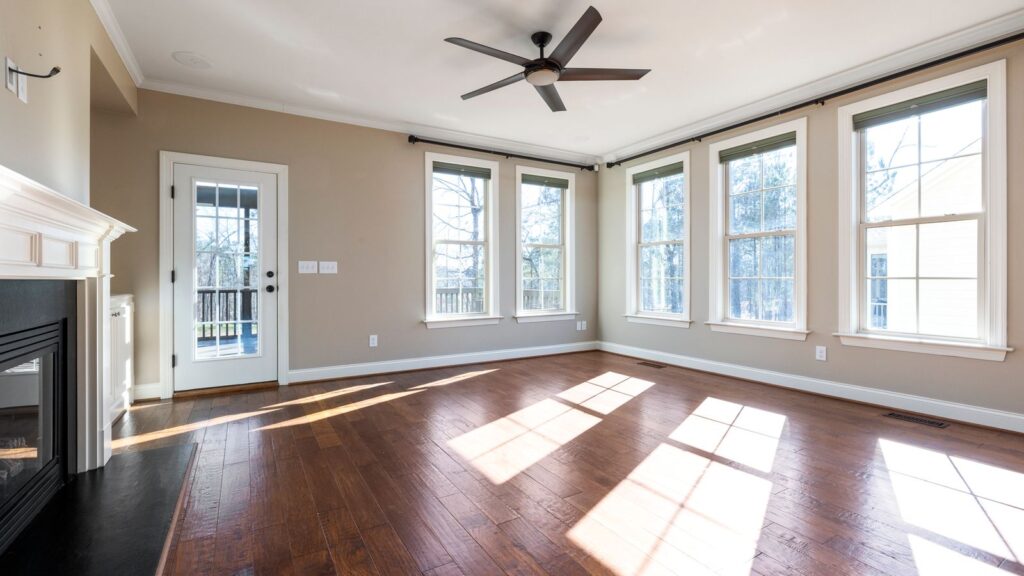
A house earns its keep on the days with no schedule.
Tuesday is easy to plan for. Everybody leaves. Everybody comes back. The house just has to hold coats and feed people and not flood. But Saturday? Saturday is when a house either works or quietly annoys all six of you for nine straight hours.
When I walk Lincoln homes with families who are upgrading out of a place that stopped fitting, we don’t start with square footage. We start with a question: what does an unplanned Saturday look like in this house?
Why the feature list lies to you
Listing descriptions are built around countable things. Bedroom count. Bathroom count. Finished basement, yes or no. Those matter, but they’re a proxy. They’re a stand-in for the thing you actually want, which is a house where people can be home at the same time without stepping on each other.
I’ve watched buyers fall for a home with every box checked and then realize, two tours later, that the only comfortable place to sit is twelve feet from the TV. The feature list was perfect. The Saturday was not.
Let’s think about how you actually live in a house day-to-day. Then let’s test for that.
The four spaces that shape unplanned time
1. The morning landing spot
Where does the first person up go? If the answer is “stands in the kitchen because there’s nowhere else,” that’s your current house, and it’s probably part of why you’re reading this. A porch, a sunroom, a corner with a chair and decent light, a back patio that doesn’t face the neighbor’s garage. It does not need to be big. It needs to exist, and it needs to be the kind of place you’d actually sit with coffee instead of just walking past.
2. A kitchen people drift into
Everyone gathers in the kitchen. That’s not a design trend, that’s just gravity. So the question isn’t whether the kitchen is updated. The question is whether three people can be in there without a traffic jam. Can someone lean on the counter while someone else cooks? Is there a spot to sit that isn’t in the path to the fridge? Can a kid do homework at the island while dinner happens around them?
Walk it. Literally. Pretend to unload a dishwasher while someone stands at the sink. You’ll know in ten seconds.
3. A yard you’d use, not just mow
Plenty of Lincoln and Southeast Nebraska lots are generous. Fewer are usable. There’s a difference between a big yard and a yard with a flat spot, some shade, and a place to put chairs where you’re not sitting in full sun at four in the afternoon. In Waverly or Seward or out toward Crete, you might get real acreage. Great. Ask yourself honestly what you’d do with it on a Saturday in July, and whether you want to spend part of that Saturday maintaining it.
4. A room where everyone can land separately
This is the one that gets underestimated. Upgrading isn’t only about more space. It’s about distance. A teenager who wants to be near people but not with people needs somewhere to go. A basement rec room, a bonus room, a finished loft, even a den off the main floor. Somewhere a person can shut a door, or not shut a door, and still be part of the house.
If the only option is “living room or your bedroom,” every Saturday becomes a negotiation.
How to actually run the test on a tour
- Stand still. Pick the main gathering room and just stand there for sixty seconds. Where would people naturally sit? Does it feel like the house is pushing you somewhere or trapping you?
- Count the exits to outside. How easy is it to get from the kitchen to the yard with a tray of food? One awkward door and the patio stops getting used.
- Find the drop zone. Where do backpacks, shoes, and sports bags go? If there isn’t an answer, they go on the floor by the front door. Forever.
- Simulate noise. If someone watches a game in the basement, can someone else read upstairs? Open layouts are great for connection and terrible for sound.
- Check the laundry path. Saturday is laundry day in most houses. If clothes have to travel the length of the house and down a flight of stairs, you’ll feel it every week.
This changes how you buy, and when
Here’s the practical part. When you’re judging homes on the life they support instead of a checklist, you get pickier, not less picky. That means you need time to find the right one, and you don’t want a sale clock forcing your hand.
That’s the whole reason I’d rather help you secure the next house first and then sell strategically. We prep your current home ahead of time so it’s ready to go, we find the house that passes your version of the Saturday test, and then we move. One move. No temporary housing. We’re not doing anything that puts you in a bad position.
There’s a way to do this without it turning into chaos. The house you’re looking for isn’t the one with the longest feature list. It’s the one where nobody has anywhere to be and that still feels good.
If your house technically works but doesn’t work for your life anymore, buying before you sell is the calmest way out: See how buy-before-you-sell works →