
Moving is disruptive. The payoff should be specific.
Not vague. Not “more space.” Not “something newer.” Specific enough that you could describe a Tuesday in the new house and it would sound noticeably better than the Tuesday you just had.
That is the bar I hold for my clients in Lincoln and across Southeast Nebraska, because packing a house, changing an address, moving a kid’s room, and rearranging your whole routine is real work. The house you move into should earn it.
Why “more space” is not a reason
When people tell me they need more space, I ask what they would do with it. Sometimes the answer is instant and detailed. Sometimes it is a long pause.
That pause is useful information. It usually means the frustration is real but nobody has traced it back to the actual source yet. And if we do not trace it, we go shopping for square footage and end up with a bigger version of the same problem. Bigger house, same morning chaos, now with more to clean.
Let’s think about how you actually live in a house day-to-day. That is where the real reasons live.
The gains that actually justify a move
Here is what I look for. If your move delivers two or three of these in a way you can describe out loud, you are onto something.
- A daily bottleneck removed. The one-bathroom morning line. The single sink everyone needs at 7:15. The hallway where two people cannot pass each other while one is carrying laundry. Bottlenecks are not an inconvenience, they are a tax you pay every single day.
- A room reclaimed. Right now the dining room is a homework table, a mail pile, and a place where the folded laundry lives until someone gives up and puts it away. A move that gives every function its own home gives you back a room you already own.
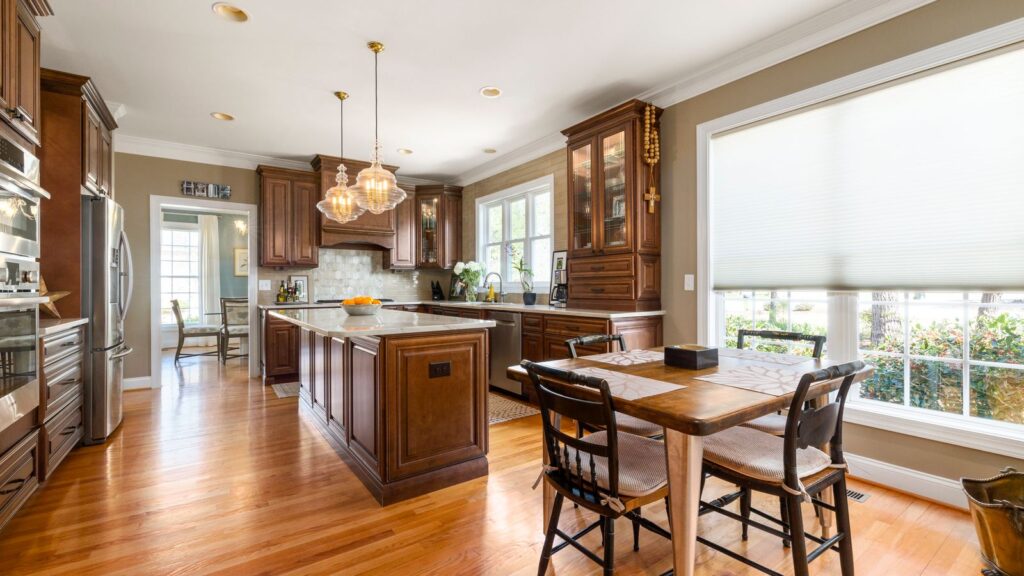
- Hosting that stops being a project. If having people over requires a staging operation, you are not hosting, you are producing an event. Some layouts make it easy. A kitchen that opens to where people actually gather changes what you say yes to.
- Maintenance reduced. This one gets ignored and it shouldn’t. Fewer deferred projects, a newer roof, mechanicals you are not nervously monitoring. Reclaiming your Saturdays counts as a lifestyle upgrade.
- Outdoor space you will actually use. Be honest here. A big yard you never go into is mowing, not living. A patio ten steps from the kitchen gets used four nights a week. Usability beats acreage unless you genuinely want the acreage, which plenty of people in our rural markets truly do.
- A drop zone. Not glamorous. Transformative. Backpacks, shoes, bags, keys, sports gear. One designated landing spot removes a daily argument from your house.
The test I use
Describe the new house as a weekday, not as a listing.
“Everyone gets ready without waiting.” “Laundry happens where the clothes are.” “The kids are not sharing a room anymore.” “I can cook while people are in the same room as me.” “I’m not spending every weekend fixing something.”
If you can say things like that, the move will pay you back long after the boxes are gone. If you can’t, we are not stuck. We just need to do more thinking before we do any shopping. That is not a delay, that is the part most people skip.
What this protects you from
Two things, mainly.
First, it keeps you from moving for the wrong gain. A house can look like an upgrade on paper and still hand you a longer commute, a worse layout, and a yard you resent. Paper does not do dishes.
Second, it keeps you from putting yourself in a bad position to chase something unclear. Timing a purchase and a sale takes planning. I am not going to build that plan around a goal nobody can describe. When we know exactly what we are solving for, we can be patient about the right house and decisive when it shows up. That is how buy before you sell works in practice: secure the next home first, then sell with real strategy, so you move once instead of twice and skip temporary housing entirely.
You do not have to wait for perfect
Worth saying clearly, because it stops a lot of people: your current home does not need to be updated to sell well. Condition is a positioning question, not a disqualifier. We price it honestly, we lead with what the house genuinely offers, and we get ahead of what buyers will notice so inspections are not a surprise.
So the work is not “fix everything.” The work is naming the gain, then building the plan around it.
There’s a way to do this without it turning into chaos. Start by writing down the three things that would be different on a random Wednesday. If that list is clear, your move is ready. The house should earn the trouble, and a good plan makes sure it does.
If your house technically works but doesn’t work for your life anymore, buying before you sell is the calmest way out: See how buy-before-you-sell works →