
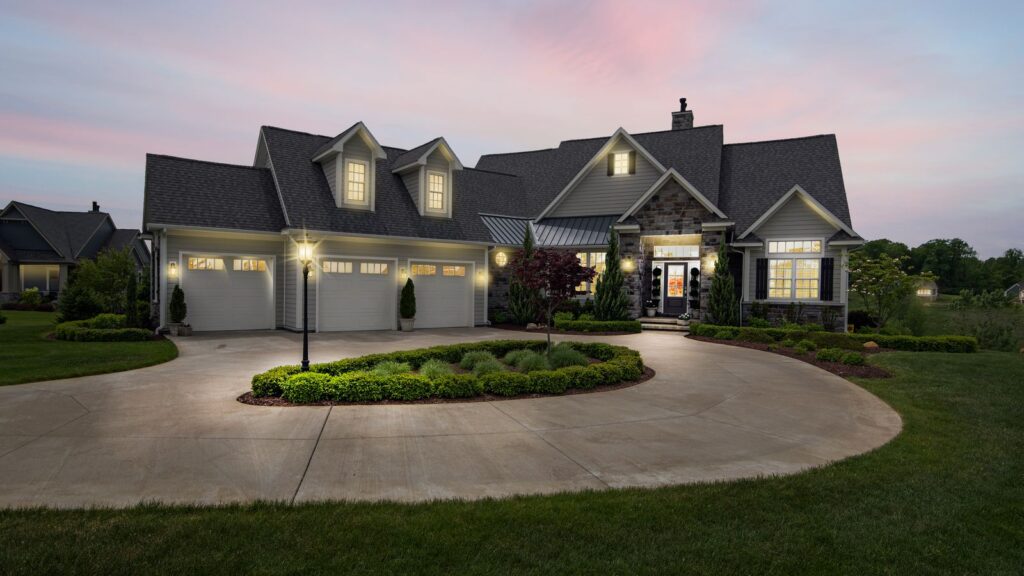
A house can pass the noon showing and fail the evening you actually live there.
Daylight is generous. It floods the kitchen, washes out the dated paint, hides the fact that the only light in the hallway is a single bulb from 1994. At 11am on a Saturday, the street is quiet, the driveway is empty, and every room feels calm. You walk out thinking this might be it.
Then you move in. And you discover the house has a whole second personality that shows up around 6pm.
I tell every move-up client the same thing: before you write an offer, go back after dark. Not to spy on anything. To see how the house actually functions during the hours you’ll be living in it hardest.
Evening is when a house gets tested
Think about your real weeknight. Everyone’s home. Dinner is happening. Somebody has homework at the kitchen table, somebody’s watching something loud, somebody’s trying to take a work call, and there’s a load of laundry that’s been in the dryer since Tuesday. That’s the house you’re buying. Not the staged, sunlit, nobody-home version.
Most of the friction that pushes people out of their current home is evening friction. The one-bathroom lineup. No place to drop backpacks and shoes. Nowhere to go when two people want two different noise levels. If you only ever see your next house in daylight, you have no idea whether you’re solving those problems or just relocating them.
What to actually check when you go back
Lighting, inside and out
Walk in and flip on every light. How does the main living space feel? Warm and usable, or like a waiting room? Count the overhead fixtures versus the rooms that rely on you bringing lamps. Check the hallway, the basement stairs, the laundry area. Then step outside. Is the driveway lit? The front walk? The side door you’ll realistically use every single day? Exterior lighting is fixable, but it’s a line item you should know about before you negotiate, not after.
Sound and separation
Stand in the kitchen while someone stands in the living room and talks at normal volume. Then go upstairs. Then go to the basement. Open floor plans look incredible in photos and sound like a gymnasium when three people are doing three different things. Some families love that. Some need a door. You won’t know which you are until you hear it.
Also listen to what’s outside. Traffic patterns shift by hour. A street that’s sleepy at noon can be a cut-through at 5:30. In Lincoln that matters near arterial routes and anywhere close to a school pickup loop. In smaller Southeast Nebraska towns, it’s less traffic and more things like a nearby rail line or ag equipment during certain seasons. Neither is automatically bad. You just want to know.
Parking, in real conditions
How many vehicles does your household park, and where do they go at 9pm? If you’ve got a teenager who just got their license, you already know one driveway spot is not the same as two. Look at how cars stack. Look at whether street parking is realistic. Look at snow. A driveway with a steep pitch is a January problem you sign up for in June.
Window privacy
With the lights on, windows become screens. Walk the main floor at night and look at what’s exposed. Can you sit in the living room comfortably, or is every blind going to live in the down position forever? Window coverings cost money, and a wall of beautiful glass can quietly turn into a project. Evaluate the setting and the sightlines, nothing else.
How the flow holds up
Do the evening walk-through in order. Come in the door you’d use. Where do the shoes go? Where does the bag land? Where does the mail stack up? Then simulate the morning in reverse. If two people need the same bathroom at 7am, stand in that hallway and picture it. Square footage doesn’t fix sequencing. Layout does.
Why this is easier when you’re not in a rush
Here’s the part people miss. You can only be this deliberate if your timeline isn’t squeezing you. When you’ve already sold and you’re racing a closing date, you take the house that’s available, not the house that works. That’s how people end up in temporary housing or moving twice.
Buying before you sell gives you room to go back at 7pm on a Tuesday and really look. It lets you say no to a house that photographs beautifully and functions poorly. We’re not doing anything that puts you in a bad position, we’re just building enough runway that you get to be picky about the things that actually matter.
The short version
- Go back after dark before you write an offer, not after inspection.
- Turn on every light and judge the rooms you’ll use most at night.
- Listen from room to room, and listen to the street.
- Park like you’d really park and think about winter.
- Check the windows with the lights on.
- Walk your actual routine, door to drop zone to bathroom.
Let’s think about how you actually live in a house day-to-day. The noon showing tells you what a house looks like. The evening visit tells you what it’s going to be like. Go see it twice before you commit to it for years.
If your house technically works but doesn’t work for your life anymore, buying before you sell is the calmest way out: See how buy-before-you-sell works →